Trezor.io/start – Getting Started With Your TreZor® (Official Guide)
Securing cryptocurrency is one of the most important steps for any digital asset holder, and Trezor® Hardware Wallets remain one of the most trusted choices. Whether you are a beginner or an experienced trader, learning the proper setup process is crucial. This comprehensive guide walks you step-by-step through Trezor.io/Start, the official onboarding portal, helping you configure your device, connect Trezor Suite, install Trezor Bridge, and ensure maximum security for your crypto portfolio.
Introduction to Trezor® and Trezor.io/Start
Trezor.io/Start is the official setup page for all Trezor devices, including Trezor Model One and Trezor Model T. It provides verified firmware, security guidelines, and connection tools like Trezor Suite and Trezor Bridge, ensuring you start safely without relying on third-party sources.
Whenever you unbox a new hardware wallet, your first action should always be to visit Trezor.io/Start, as this guarantees authenticity and provides the latest updates directly from the official Trezor team.
In this guide, we will repeatedly reference Trezor.io/Start, Trezor Suite, and Trezor Bridge so you fully understand how these components work together to protect your crypto.
1. Why Trezor® Is the Most Trusted Hardware Wallet
Before diving into setup steps, it’s important to understand why the Trezor ecosystem is built around security, transparency, and full user control.
1.1 Open-Source Security
Trezor® hardware, Trezor Suite, and Trezor Bridge use transparent, open-source codebases. This is rare in the wallet industry and ensures:
No hidden backdoors
Community-verified updates
Clear trust architecture
This is why millions of users trust the onboarding flow using Trezor.io/Start as the official path.
1.2 Offline Private Keys
Private keys never leave the device. Even when you connect through Trezor Suite or via Trezor Bridge, the signing process remains local and secure. Trezor.io/Start reinforces this during setup.
1.3 Easy, Beginner-Friendly Interface
The combination of:
Trezor Model One
Trezor Model T
Trezor Suite desktop/web app
Trezor Bridge connectivity layer
creates a smooth onboarding experience. Even beginners following Trezor.io/Start face no complexity.
2. Getting Started at Trezor.io/Start
The official onboarding process begins at Trezor.io/Start, where you verify the authenticity of your device and follow clear steps on how to proceed.
2.1 Visit the Official Link
Type Trezor.io/Start manually into your browser.
Avoid using links from social media, ads, emails, or unknown sources.
2.2 Select Your Device
You will see options like:
Trezor Model T
Trezor Model One
Choose the correct model to begin configuration.
2.3 Install Trezor Suite (Required)
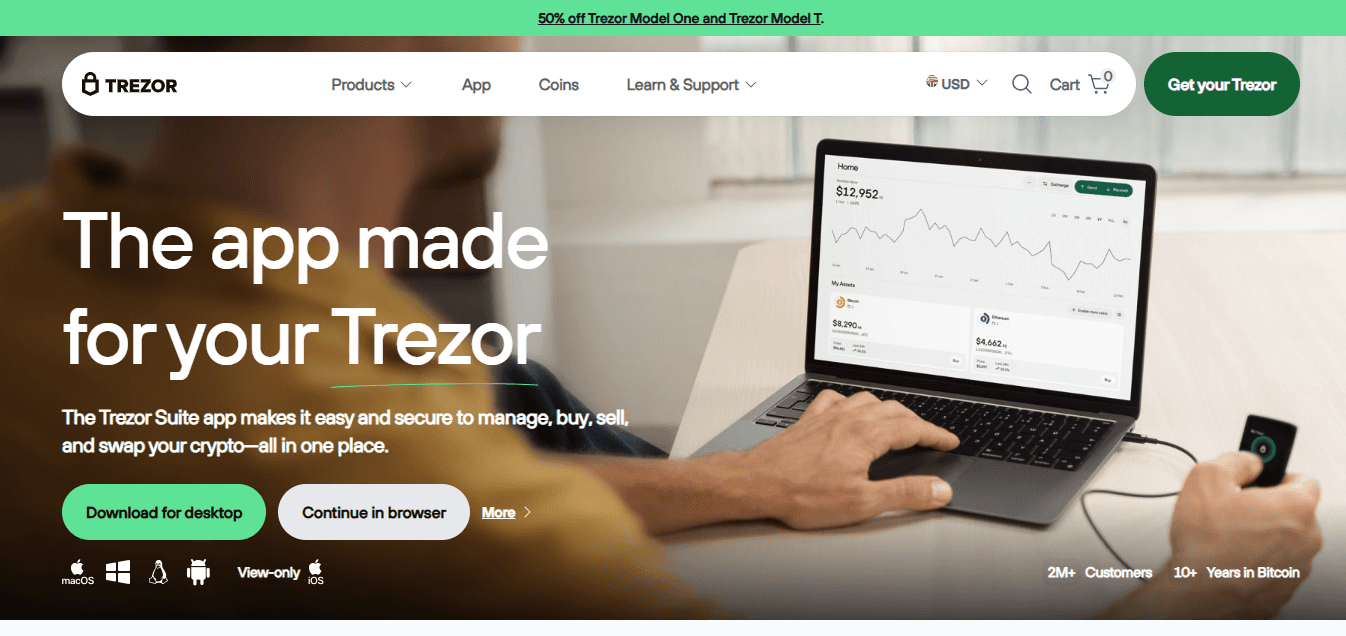
Trezor Suite is the primary interface for managing your crypto.
From Trezor.io/Start, download Trezor Suite for:
Windows
Mac
Linux
This software allows you to send, receive, buy, exchange, and track your crypto portfolio.
3. Understanding Trezor Suite (Core Crypto Management Tool)
Trezor Suite is central to the Trezor ecosystem. It’s referenced multiple times in the official guide because it:
Acts as the control panel for your hardware wallet
Manages assets across multiple blockchains
Provides advanced privacy tools
Here’s how it fits into the overall setup:
3.1 Key Features of Trezor Suite
Secure transactions with hardware-based signing
Portfolio tracking
Buy, sell, and swap features
Tor integration for privacy
Password manager compatibility
Hidden wallets and passphrase support
3.2 Connecting Through Trezor Bridge
If Trezor Suite cannot detect your device, Trezor.io/Start will ask you to install Trezor Bridge.
Trezor Bridge is the secure communication layer allowing your browser or desktop app to recognize your hardware wallet.
4. Installing Trezor Bridge for Browser Connectivity
Although Trezor Suite handles most communication, Trezor Bridge remains an essential component for browser-based interaction.
At Trezor.io/Start, you will be prompted to install it if your system needs it.
4.1 Why Trezor Bridge Matters
Ensures safe communication between hardware and computer
Eliminates browser extension risks
Offers stable USB communication
4.2 Supported Systems
Trezor Bridge works on:
Windows
Mac
Linux
Once installed, Trezor.io/Start auto-detects your device seamlessly.
5. Step-by-Step Trezor Device Setup
Here is the complete process you follow after visiting Trezor.io/Start:
Step 1: Connect Your Device
Use the USB cable provided inside the box.
Never use third-party accessories from unknown vendors.
Step 2: Install or Update Firmware
Trezor devices ship without firmware for security reasons.
Trezor.io/Start guides you to install official firmware.
This includes:
Security patches
Feature updates
Compatibility fixes with Trezor Suite and Trezor Bridge
Step 3: Create a New Wallet
Trezor will generate your Recovery Seed (12, 18, or 24 words).
Important rules:
Write down seed words on paper
Never take screenshots
Never store seeds online
Never share the seed on any website, including Trezor.io/Start, Trezor Suite, or Trezor Bridge
Your seed phrase is the key to your entire crypto portfolio.
Step 4: Set a PIN
This prevents unauthorized access.
Choose a strong PIN, ideally 6–9 digits.
Trezor Suite helps configure it safely.
Step 5: Add Cryptocurrency Accounts
Inside Trezor Suite, you can add wallets for:
Bitcoin
Ethereum
USDT
BNB
Litecoin
Polkadot
Cardano
Over 1,000+ supported assets
All confirmed through secure signing via your hardware device.
Step 6: Enable Additional Security Features
From Trezor Suite, you can enable:
Passphrase (hidden wallet)
Shamir backup (Model T)
Tor integration
Secure labeling and custom naming
These all enhance security beyond the basic PIN.
6. Using Trezor.io/Start for Troubleshooting
Many new users rely on Trezor.io/Start for guidance when facing issues like:
Device not detected
Firmware installation errors
Trezor Suite connection problems
Trezor Bridge malfunction
The official page offers detailed FAQs and solutions.
7. Understanding How Trezor.io/Start, Trezor Suite, and Trezor Bridge Work Together
Trezor.io/Start
Official starting point → verifies device + downloads required tools.
Trezor Suite
User dashboard → manage crypto, add accounts, send/receive funds.
Trezor Bridge
Connection layer → enables browser/desktop communication.
They form a secure 3-part ecosystem built around user-controlled security.
8. Staying Safe: Essential Security Guidelines
To keep your wallet safe, always:
Use Trezor.io/Start for official downloads
Verify URLs manually
Never share your seed phrase
Update Trezor Suite and Trezor Bridge regularly
Enable 2–3 security layers (PIN, passphrase, hidden wallet)
Use your device offline as much as possible
These steps ensure your crypto remains secure forever.
9. Keyword-Focused Recap (SEO Section)
This section reinforces the required keywords naturally:
Trezor.io/Start is the ONLY official link for setting up your device.
Trezor Suite is essential for managing your assets securely.
Trezor Bridge ensures smooth hardware-to-computer communication.
Always start your setup journey from Trezor.io/Star.
Update Trezor Suite regularly for the latest features.
Install Trezor Bridge if your browser cannot recognize the device.
Remember: Trezor.io/Start, Trezor Suite, and Trezor Bridge together form the official Trezor ecosystem.
Conclusion
Setting up your Trezor device through Trezor.io/Start is simple, secure, and beginner-friendly. With the combined power of Trezor Suite for portfolio management and Trezor Bridge for connectivity, you gain full control over your digital assets with the highest level of security in the crypto space.
Whether you’re storing Bitcoin, Ethereum, stablecoins, or long-term investments, following this official path ensures your funds remain safe.